
Kosciusko County Police Blotter
Kosciusko County publishes no official multi-day arrest-log portal on a fixed weekly or 72-hour cycle. The steadiest public blotter around is the InkFreeNews Public Records archive. That feed mixes Jail Bookings posts with Area Police Reports, court items, and individual arrest stories. Recurring most-wanted features appear too. Treat it as local journalism built from police sources. It is not the Sheriff's live custody record.
Why does the archive matter so much here? Booking articles often bundle entries from several dates at once. A weekend arrest may surface in a post that lands days later. Editors process the batch first. The coverage is real but not complete. The publisher itself warns that early police information can change after further investigation or privacy edits.
Read Kosciusko Arrest Reports
Start with the newest Public Records page and work backward by article date. Open the posts labeled Jail Bookings when you need county intake details. Area Police Reports play a different role. They can cover calls and incidents that never ended in a jail booking. Skip them for a custody question. Individual crime stories are selective by nature. For current custody, the county roster remains the right tool.
- Open the Public Records archive and note the date and time of each relevant post.
- Select Jail Bookings, then compare the booking date inside each entry with the article date.
- Check several prior archive pages when a weekend or holiday falls inside the desired period.
- Verify current custody through the Sheriff's inmate gateway or AIS at 866-322-5857.
- Use the court record for later charges and disposition, not the old news post.
Speed matters sometimes. The Arrests Last 24 Hours page offers a same-day fallback chain. The blotter, by contrast, suits a broader lookback after that first day has passed and you need a dated report.
Kosciusko Blotter Entry Fields
Jail Bookings posts from InkFreeNews repeat a familiar set of fields. That article format is not an official county schema, though. The Sheriff-linked roster lists its own fields.
| Published item | How to interpret it |
|---|---|
| Name and age | Identity details as reported; compare with an official source. |
| Locality or address | A reported residence or locality, not necessarily the arrest location. |
| Booking date | The stated jail intake date, which may predate publication. |
| Charge wording | Charges at booking, subject to change in court. |
| Bond or no bond | Status reported for the article, not a live release indicator. |
| Image | A secondary publication image, not proof of guilt or present custody. |
Booking number, arresting agency, release date, and photo policy vary too much across the archive to treat as standard.
Kosciusko Weekend Booking Batches
Some days carry more than one Public Records post, with morning and afternoon time stamps. An August 2026 Jail Bookings article pulled in entries from multiple booking dates. So no rule holds. A Monday story may reach back past Sunday. The newest post may still miss a weekend arrest or two. Check every recent post first. Never assume someone was not booked. An older Kosciusko County Jail Bookings example shows how deep the archive runs.
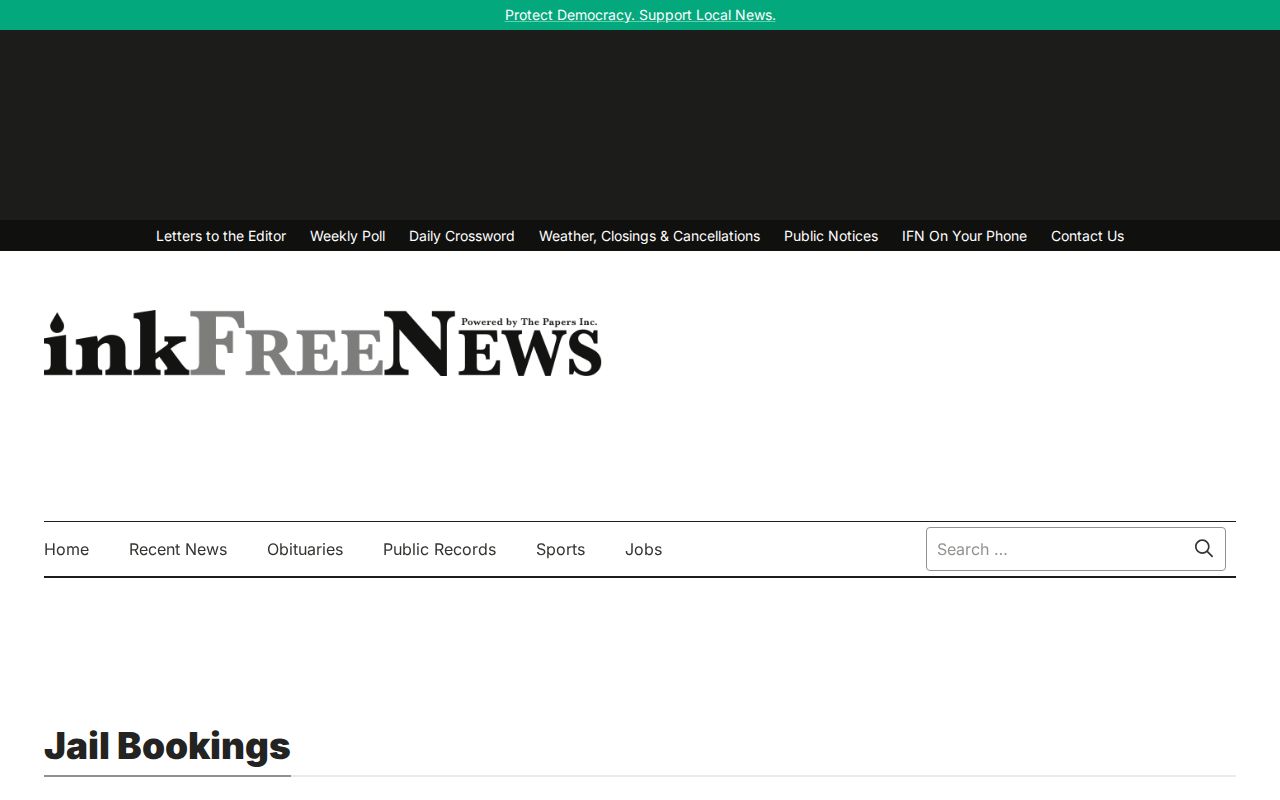
An archived page can help you locate an old publication, but its contents stay secondary.
Kosciusko Arrest Archive Depth
InkFreeNews archives stretch back years. A newspaper archive is still not the official retention system. Indiana's public-safety retention schedule assigns different periods by record series. Adult inmate custody files cover intake, booking, transfer, release, arrest cards, court records, and victim notification. Destruction is scheduled ten years after incarceration ends. Routine incident logs last five years after entry. Daily bulletins last one.
No schedule line treats a booking photograph as its own record series. Its handling depends on how the Sheriff's custodian stores it. Holds, open cases, and expungement orders can also alter normal disposition. For an older record, ask the Sheriff's Office which series governs it. Then ask the Clerk or court for the outcome.
Note: an article staying online does not mean the underlying official file shares that lifespan or current legal status.
Blotter Versus Official Record
A blotter preserves one publisher's report at one moment. The Sheriff holds jail custody data. The arresting agency holds its incident report, and the court holds the case outcome. Each answers a different question. An old booking article may never reflect a later dismissal or amended charge.
| Source | Best use | Limit |
|---|---|---|
| Sheriff roster or AIS | Current county custody | Roster fields and persistence were not verified. |
| InkFreeNews | Multi-day local publication trail | Secondary, selective, and potentially delayed. |
| Indiana MyCase | Later public court events and disposition | Some records or documents are confidential or restricted. |
The News Now Warsaw site covers crime and police operations episodically, with no stable daily roster.
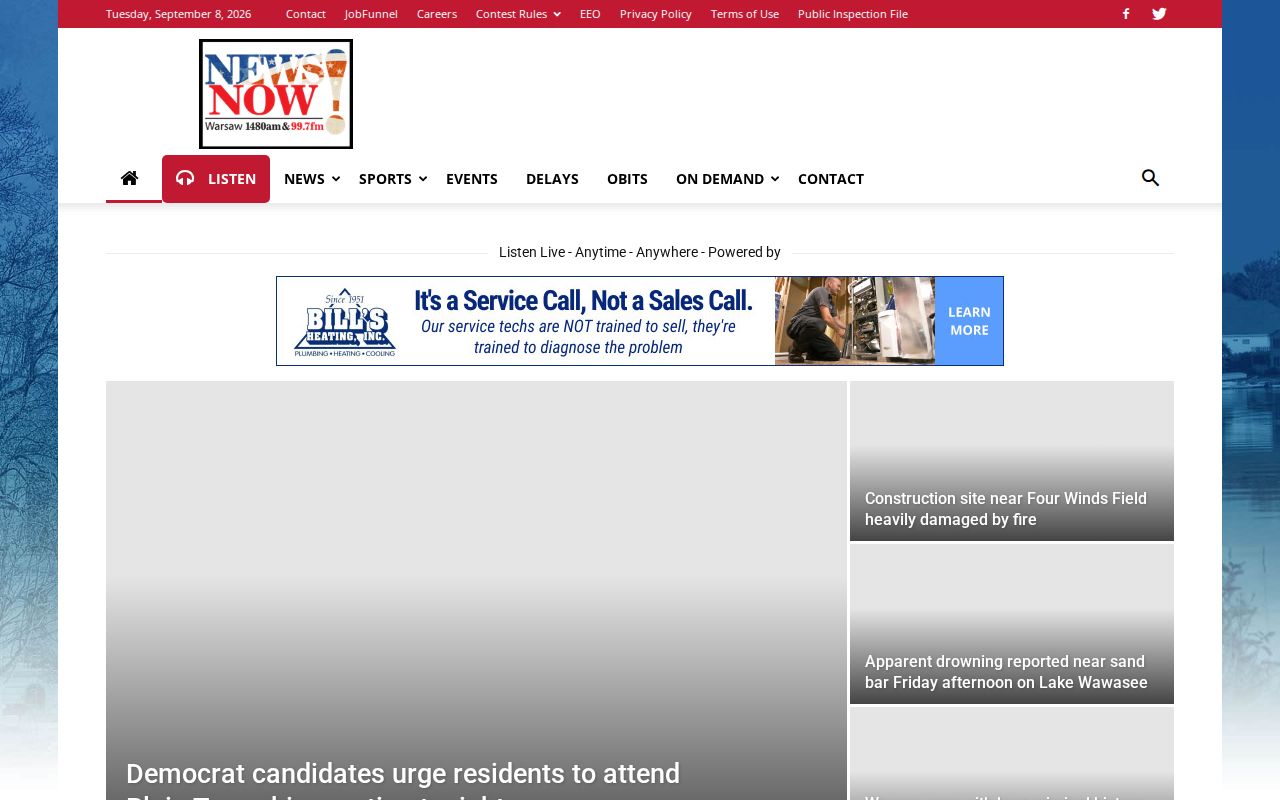
Treat the blotter as a starting point, then verify the arrest or booking detail with the agency and court.
Find Older Kosciusko Arrest Records
Search the InkFreeNews archive by date and name. But start any official request with the agency that created the record. The Sheriff's records and report line is 574-265-2219. Its services page names no separate booking-photo custodian and offers no Sheriff booking-record form. Ask whether Booking, Records, the arresting police department, or another office holds what you need.
Never route a Sheriff request through the county web form marked FOR CLERK'S OFFICE ONLY. For a jail record, describe the person and the approximate booking date. Add the record type. Say whether you want a photograph. For a disposition, search Indiana MyCase or call the Kosciusko County Clerk. A disposition is the court's final recorded outcome.
Unofficial Kosciusko Arrest Archives
Third-party sites demand a skeptical eye. RecentlyBooked's Kosciusko section claims a rolling 30-day view of arrests. The site is unofficial. Its listings can sit stale for weeks. Mugshots.com exposes a county-level path, but no active local page backs it up. Arrests.org handles Indiana as a whole. A Kosciusko-only roster is not really on offer there. Treat each of these as a lead, never as the record itself.
The RecentlyBooked county page shows what a longer third-party window looks like. It also carries update claims all its own.
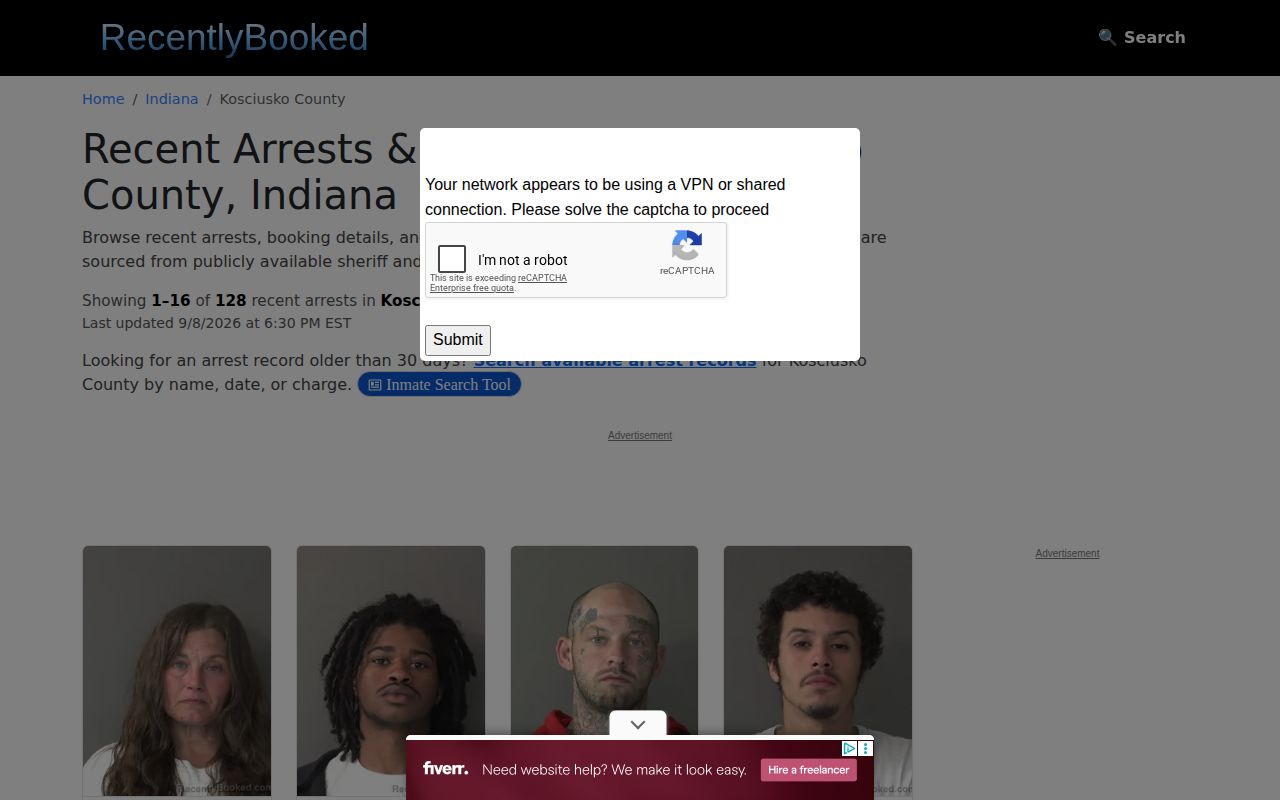
These unofficial archives only sketch the local information landscape. Confirm every entry through the Sheriff and the courts.
Arrest Entries Are Accusations
Old news articles can outlive the arrest they describe. A story from two years ago can linger. The case it describes may since have been dismissed. Compare any dated coverage with the current court docket before trusting a status claim. A booking date only proves intake was reported. It says nothing about where a person stands today.
City labels deserve care too. A Warsaw, Winona Lake, or Syracuse address in a booking item often marks residence. It rarely marks the arrest scene or the arresting agency. Joint operations can pull in several police departments at once. The incident report names who acted. Kosciusko County Jail channels, in turn, speak only for county custody. Keep those apart. That stops a county-wide booking article from being misread as a city police log.
Once a published window closes, go to the actual custodian of the record. Indiana's retention schedule generally gives routine incident reports and logs five years. Daily bulletins get one year. Adult inmate custody files last ten years after incarceration ends. Those clocks bind the agency, not InkFreeNews or any other publisher of a web article. A hold or a court order can change the routine handling. So can an expungement or a file's particular classification. Ask the Sheriff or the police department which series applies. Assume no archive page holds the complete official record.